
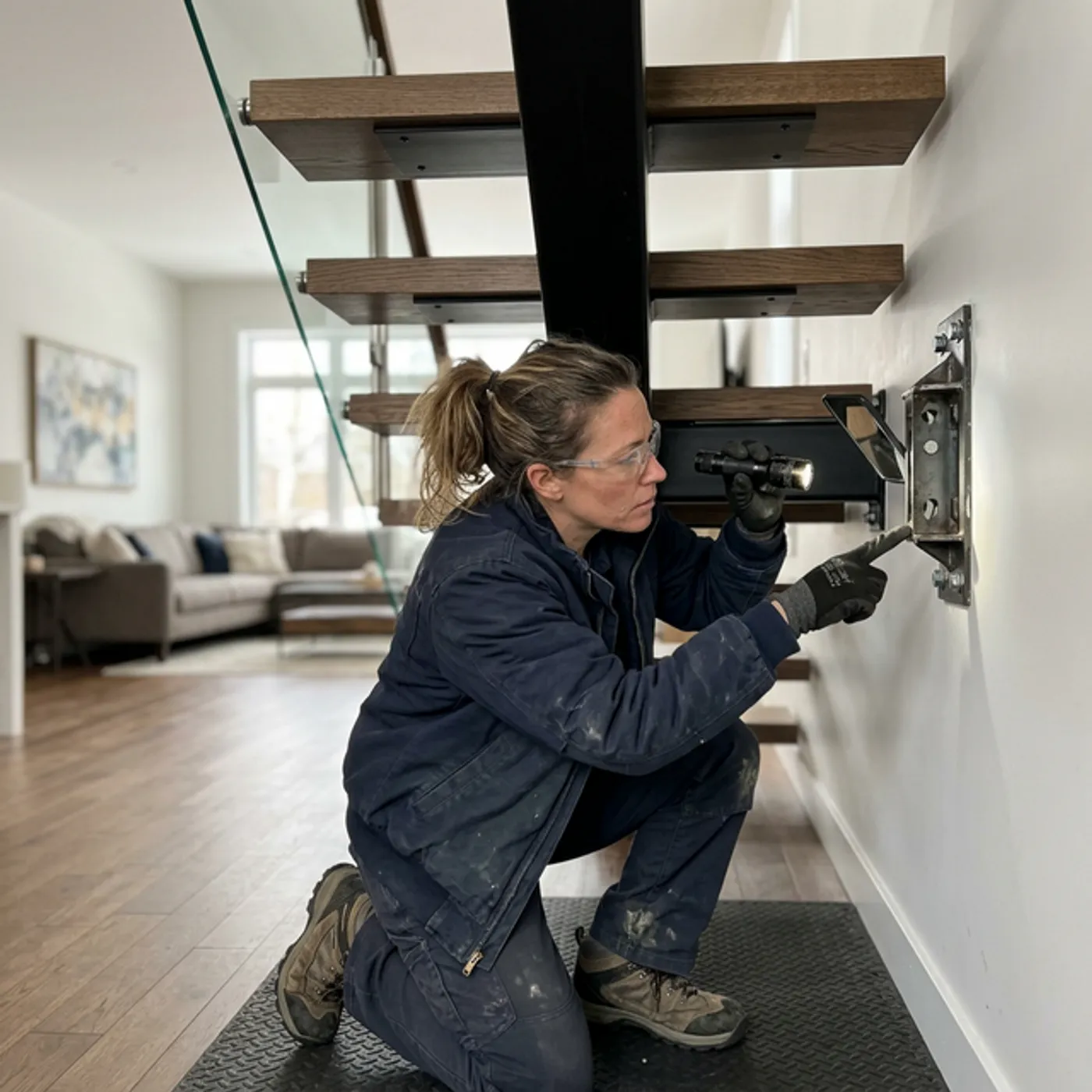
Annual Safety & Maintenance Inspection for Floating Stairs in Toronto, ON
Annual inspection and upkeep support for floating stair systems across the GTA. Hardware torque checks, finish review, and structural fastener assessment — by the people who understand how these systems are built.
Toronto Floating Stairs provides annual safety and maintenance inspections for floating stair systems throughout Toronto and the Greater Toronto Area — for systems we installed and for systems installed by others.
Floating stair systems are structural assemblies with multiple connection points, fasteners, and finish surfaces that all require periodic attention. A stair that performed correctly at installation may develop looseness in bracket fasteners over time due to seasonal wood movement, thermal cycling, or cumulative load cycles. A hardwood tread that looked perfect at installation may need spot refinishing after two years of daily use. Glass balustrade base channels may need re-torquing if a fastener worked loose. None of these are failures — they're normal characteristics of a well-used structural assembly that benefits from scheduled attention.
Our annual inspection covers the full stair system: anchor fasteners at each wall bracket (torque-verified), tread-to-bracket connections, railing post connections and handrail hardware, glass panel seating and hardware torque (for glass balustrade systems), LED channel condition and connection integrity (if applicable), and hardwood tread finish assessment with recommendations. We provide a written report after the inspection with findings and any recommended remediation items.
We inspect systems installed by other contractors without requiring you to hire a separate structural engineer for assessment. Our inspectors understand how floating stair systems are built because they build them — which means they know what to look for that a general home inspector won't catch.
Inspection scope
Structural fastener torque verification at all wall bracket anchor points. Tread fastener check and tightening as needed. Railing system hardware torque check. Glass panel seating inspection. LED system visual check (for systems with integrated lighting). Hardwood tread finish condition and sanding recommendation if applicable. Stringer-to-floor connection check (if accessible). Written report with findings, photos, and remediation recommendations.
For condo boards and property managers
Annual inspection reports from a qualified contractor are useful documentation for condo corporations managing common element floating stairs. We provide a structured inspection report in a format suitable for board minutes and maintenance records. We service condos in the City of Toronto, North York, Etobicoke, Scarborough, Mississauga, and Vaughan.
Schedule your annual floating stair inspection in the GTA
We inspect systems we installed and systems installed by other contractors. Written report provided after every inspection.
- ✓ Wall anchor fastener torque check
- ✓ Tread fastener tightening
- ✓ Railing hardware inspection
- ✓ Glass panel seating check
- ✓ Written report with photos
Frequently Asked Questions
How often do floating stairs need to be inspected? +
Can you inspect a floating stair that you didn't install? +
What's typically found during a floating stair inspection? +
Do condo boards require floating stair inspections in Toronto? +
What if the inspection finds a structural concern? +
Schedule a floating stair inspection in the GTA
Written report included. We inspect systems we installed and systems installed by other contractors.