
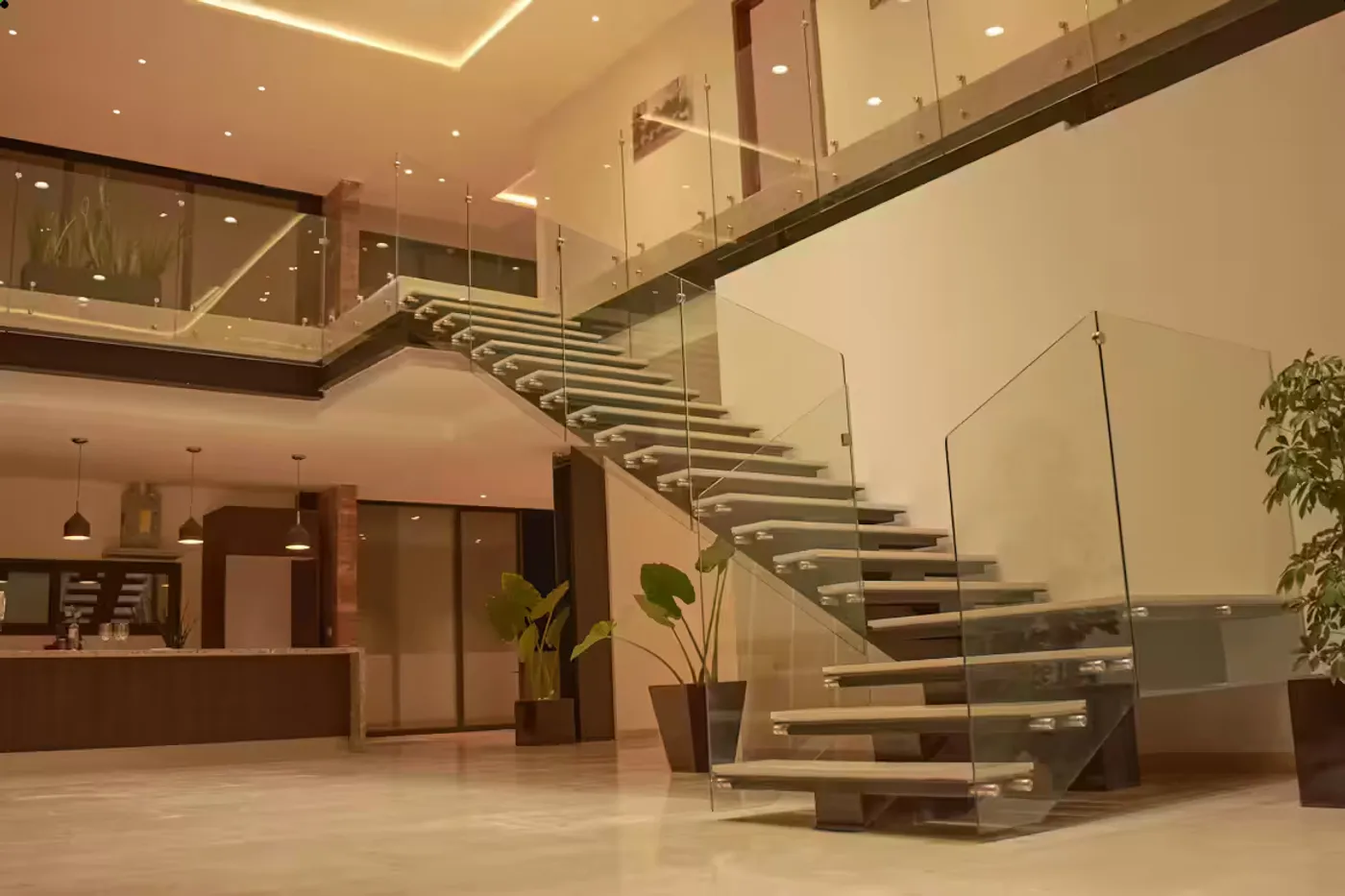
Wood Tread Options for Your Floating Staircase in Toronto, ON
The structure is laser-cut steel. The difference you feel and see is the wood you choose — species, grain, hardness, and finish all determined by your home and Toronto's climate.
Every floating stair system built by Toronto Floating Stairs uses a laser-cut steel structure — fabricated in our shop, delivered finished, and installed without on-site welding or grinding. This page is about the wood tread choice: how we select, acclimate, and finish the treads for Toronto's climate and your specific interior.
The wood is what you touch and see every day. The right species — matched to the existing flooring species, stain, and finish in your space — makes the staircase feel like it belongs rather than like it was added as an afterthought. Toronto's freeze-thaw winters and humid summers create real movement in wood. Acclimation before installation isn't optional — it's how we prevent seasonal gapping after the stair goes in.
We work with white oak most often. It's the dominant species in high-end Toronto renovations right now — strong grain structure, excellent finishing properties, and compatibility with the wide variety of stain tones used in the market. Walnut is the other common choice for clients who want deeper tones and a richer, more dramatic wood. Maple works well for contemporary interiors where a lighter, more uniform grain is preferred.
Tread thickness matters structurally. A floating tread needs enough cross-section to resist deflection under live loading — particularly at the unsupported end of a cantilevered tread. We specify tread thickness based on span, species, and calculated load requirements, not on what's stock at the supplier.
Finishing is done after installation, not before. This eliminates the ding-and-scratch problem common when pre-finished treads are handled repeatedly during transport and installation. On-site finishing also allows us to blend edge treatments, stain tones, and sheen levels to match existing floors — something that's impossible with factory-finished treads.
Wood species we use for Toronto floating stairs
White oak (natural, cerused, and custom stain), black walnut, hard maple, white ash, and hickory are the most common species in our projects. We can source custom species for the right application. All wood is kiln-dried to Ontario moisture conditions to minimize post-installation movement.
Tread profile and edge options
Standard tread profiles include eased edges, quarter-round, and full bullnose. We also fabricate live-edge treads for clients who want a more organic, natural character. Tread thickness typically runs 50mm to 65mm for cantilevered spans, with solid or engineered construction depending on span requirements and wood movement considerations.
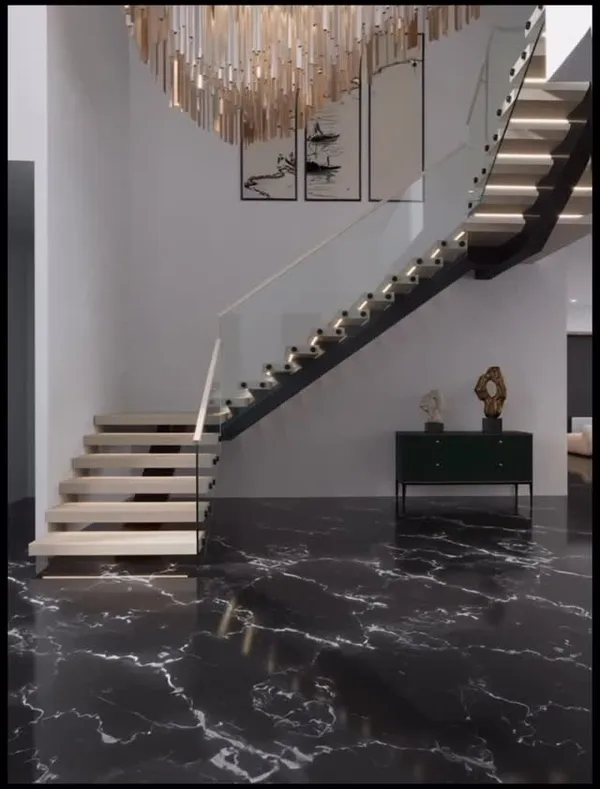
Design your hardwood floating stair
Project review first. If field verification is required, we bring wood samples and assess your existing floors to recommend the right species and finish direction.
- ✓ White Oak (natural & stained)
- ✓ Black Walnut
- ✓ Hard Maple
- ✓ White Ash
- ✓ Custom species available
Choosing the Right Wood Species
Wood Tread Selection — FAQ
Can wood treads be matched to my existing floors? +
How thick do wood treads need to be for a floating stair? +
Do wood treads on floating stairs require maintenance? +
Can wood floating stair treads be refinished later? +
What does wood tread selection add to the cost of a floating stair system? +
Choose Your Wood — We Handle the Steel and the Install
Site assessment. Species samples at the visit. Itemized proposal within 72 hours.