

Ontario Building Code Engineering for Floating Stairs in Toronto, ON
Stamped structural drawings, load calculations, and permit documentation for Toronto floating stair projects — handled in-house by a licensed engineer.
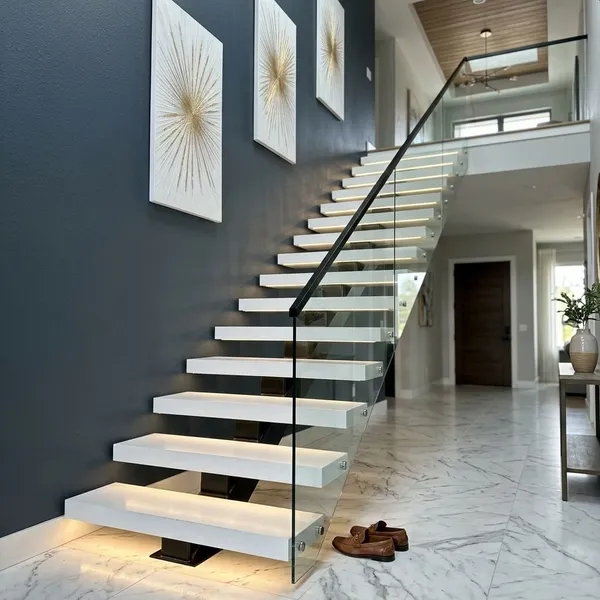
Toronto Floating Stairs manages the structural engineering side of floating stair projects in Toronto, ON — from wall assembly review and load path calculation to the stamped drawings required for OBC permit submission.
Most floating stair contractors in Toronto outsource engineering. That creates a coordination gap: the engineer doesn't fully understand the installation, and the installer doesn't fully understand the engineering. We do both under one contract. When questions come up during permit review or inspection, we answer them directly.
The Ontario Building Code sets specific requirements for stair systems — tread depth, rise height, guard rail height, load resistance, and anchorage. For cantilevered and floating systems, the wall assembly supporting the stringer brackets must be documented, reinforced if necessary, and detailed in the permit drawings. That documentation has to be accurate or the permit gets delayed.
We work with the City of Toronto Building Division and GTA municipalities. Permit submission formats, required plan content, and inspector expectations vary slightly by jurisdiction. We know the differences and prepare submissions accordingly.
What the engineering scope covers
Our OBC engineering scope for a floating stair project typically includes: site visit and wall assessment, structural load calculations for treads and stringers, anchorage design and connection details, stamped architectural and structural drawings for permit submission, and support through inspections if questions arise. We don't hand you a drawing package and disappear.
When engineering is required
In Ontario, any alteration that affects the structural system of a building requires a permit and stamped engineering when the scope exceeds OBC thresholds. Floating and cantilever stair installations almost always cross that threshold — particularly when wall reinforcement or new anchor points are involved. If you're not sure whether your project requires a permit, we can tell you during the site assessment.
Permit questions? Start here.
We assess your project and explain exactly what OBC documentation is required before any work begins.
- ✓ Structural load calculations
- ✓ Stamped permit drawings
- ✓ Anchorage connection details
- ✓ Wall reinforcement specs
- ✓ Inspection support
Ontario Building Code — Key Stair Requirements
OBC 2012 Part 9 residential requirements. Commercial and mixed-use follow Part 3 standards which differ. All projects reviewed at time of permit submission.
Frequently Asked Questions
Do I need a permit for floating stairs in Toronto? +
What's the difference between an architect and a structural engineer for stairs? +
How long does OBC permit approval take in Toronto? +
Can you handle permits for condos and commercial buildings? +
What happens if my existing wall can't support the stair system? +
Need OBC engineering for your Toronto stair project?
Site assessment. We tell you exactly what's required before any work begins.